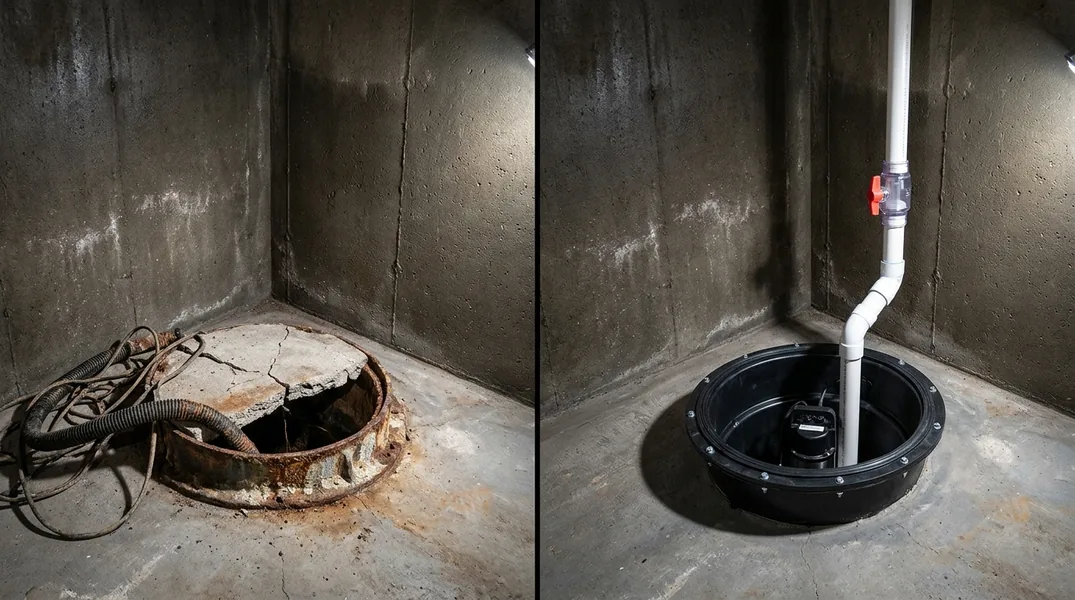
Why Spring Rains Put Your Sump Pump to the Test in Springfield
Spring in Central Illinois brings a familiar pattern: snowmelt, saturated soil, and weeks of steady rain. For homeowners in Springfield, that combination sends a tremendous amount of water toward foundation walls and under basement slabs. Your sump pump is the last line of defense, and it has likely been sitting idle for months. The first heavy storm of the season is not the time to discover it won't start.
A sump pump that has sat dry through winter can develop stuck floats, corroded switches, or clogged intake screens. Even a pump that ran fine last spring may struggle after a long dormancy. The goal of pre-spring maintenance is simple: confirm the pump runs, confirm it moves water, and confirm it has a reliable power source when the storm knocks out electricity. Homeowners who take these steps in late winter or early spring avoid the most common cause of Basement Waterproofing failures: equipment that was never tested.
Sump Pump Maintenance Checklist Before the First Storm
Start with a visual inspection of the pit. Remove the lid and look for debris, silt, or gravel that may have settled around the pump intake. A clogged screen forces the motor to work harder and can burn it out during a long rain event. Next, check the float. Lift it manually to confirm the pump kicks on and shuts off cleanly. If the float feels stiff or the pump hesitates, replace the switch before the rainy season rather than after a flood.
Then test the discharge line. A frozen or disconnected pipe is one of the most common reasons a working pump still fails to protect a basement. Run the pump for a full cycle and watch water exit the discharge line outside. If flow is weak, check for kinks or blockages. Finally, pour a bucket of water into the pit to simulate a storm and confirm the pump clears it quickly. This simple test takes ten minutes and reveals most problems before they become expensive.
Don't Skip the Sump Pump Check Valve
The sump pump check valve is a small component with a big job. It keeps water in the discharge line from flowing back into the pit after the pump shuts off. Without a functioning check valve, every cycle sends water back down, forcing the pump to run repeatedly and shortening its life. In a heavy spring storm, a failed check valve can mean the pump never gets ahead of the incoming water.
Inspect the valve for mineral buildup or debris, and listen for a clunk or gurgle after the pump stops. If water drains back into the pit after each cycle, the valve is stuck open or installed incorrectly. Replacing a check valve is inexpensive and should be part of every pre-spring tune-up. If you are unsure how to test yours, a quick call to Springfield Waterproofing at (217) 960-8508 can help you decide whether it needs replacement.
Battery Backup Sump Pump: Your Safety Net During Spring Storms
Spring storms in Central Illinois frequently knock out power, and a primary sump pump without backup is useless the moment the electricity fails. A battery backup sump pump runs on a charged battery and takes over automatically when the main pump loses power or fails. This is especially important during the kind of multi-day rain events that saturate soil and keep water flowing into foundation drains for hours.
Test your backup system now, not during the storm. Check the battery charge, confirm the backup pump activates when the primary is unplugged, and inspect the backup float for free movement. Batteries degrade over time, so replace any unit that is more than three to five years old. If your basement has flooded before or your home sits in a low-lying area of Chatham or Sherman, a battery backup is not optional. It is the difference between a dry basement and a costly cleanup.
Storm Basement Flooding: When to Call a Pro Near Me
Some warning signs point to problems beyond routine maintenance. If your pump runs constantly during moderate rain, short-cycles, or leaves standing water in the pit, the issue may be undersized equipment, a failing Interior Drain Tile System, or poor drainage around the foundation. Storm basement flooding often has more than one cause, and replacing the pump alone will not fix a drainage problem.
If you notice damp walls, efflorescence, or water seeping at the cove joint after storms, it is worth having a professional evaluate the whole system. Exterior Basement Waterproofing and Foundation Waterproofing address water before it reaches the pump, reducing strain on equipment and protecting the structure. Homeowners in Williamsville and across the Springfield area can request a free estimate to find out whether maintenance is enough or a larger repair makes sense. You can also review pricing to plan ahead.
Build a Spring Maintenance Routine That Protects Your Basement
The best defense against spring rain is a routine you repeat every year. Mark a date in late February or early March to test the pump, clean the pit, check the check valve, and verify the battery backup. After each major storm, take five minutes to confirm the pit is clear and the pump is not running continuously. Small habits prevent the emergency calls that come after a basement is already wet.
If you would rather leave the testing to a professional, Springfield Waterproofing serves homeowners throughout the Springfield area with maintenance checks and full waterproofing solutions. Call (217) 960-8508 to schedule a visit before the spring rains arrive, or reach out online for a free estimate. A little preparation now keeps your basement dry when it matters most.
Looking for a professional basement waterproofing contractor in Springfield? Springfield Waterproofing responds fast for all your basement waterproofing needs.
Get a Free QuoteOur services: Basement Waterproofing · Interior Drain Tile System · Exterior Basement Waterproofing