



Foundation Crack Repair in Springfield: Stop the Water Before It Spreads
Springfield sits on glacial till and windblown loess silt over clay, and that clay drains slowly. When spring rain and snowmelt stack up, groundwater presses against the low basement walls of the city's 1900s-1940s brick bungalows and foursquares in Enos Park and Ridgely. Foundation Crack Repair in Springfield starts with reading the crack itself: hairline shrinkage in a poured wall is a different animal from a stair-step crack in block or a widening seam in old stone. We inject non-structural cracks with epoxy or polyurethane, and we tell you plainly when a crack is a symptom of hydrostatic pressure that needs drainage work instead of another tube of sealer. One call to (217) 960-8508 gets a free basement inspection on the books. If the walls are damp beyond the crack line, start with our basement waterproofing overview before you spend a dollar on injection.
Why Cracks Open Here: Clay Soil, Freeze-Thaw, and Old Springfield Basements
The dominant failure in this city is water pushed by hydrostatic pressure through cracks and cold joints, not a sudden structural collapse. Springfield's clay holds water after every soaking rain, then the freeze-thaw cycle works the same seam open and shut all winter. In the older near-downtown blocks, stone and brick walls were laid with lime mortar that softens over a century, so a crack that looks minor can be tracking water behind the parging. West-side subdivisions built from the 1970s on have poured full basements where shrinkage cracks are normal and usually benign. The crack tells you which one you have.
- Shrinkage cracks in poured walls run vertical or diagonal and typically stay under 1/8 inch.
- Stair-step cracks in block walls follow the mortar joints and often signal footing movement.
- Horizontal cracks low on the wall point to soil pressure and need a structural look, not injection.
- White efflorescence means water is moving through the wall and evaporating on the inside face.
- Rust stains or damp carpet along the wall base after a storm point to a crack feeding the perimeter.
Sort the crack type first, because the wrong repair method wastes money and hides the real problem for a season.
Key info: A 1920s brick foursquare off South Grand with a stair-step crack near the corner is usually footing movement from clay settlement, not a simple injection job. A 1990s poured wall in Chatham with one vertical hairline crack is the textbook epoxy injection candidate.
Permits for structural foundation repair vary by jurisdiction, so confirm requirements with the City of Springfield Building and Zoning office before work begins: springfield.il.us.
How We Repair a Foundation Crack in Springfield, Step by Step
Every job starts with a walk of the basement perimeter, a moisture meter on the wall, and a look at the grading and downspouts outside. We match the method to the crack instead of running one patch on everything. If the crack is dry and stable, injection is the answer. If water is entering at the cove joint or through the floor, the crack is a side issue and drainage is the real fix.
- We map the crack's width, direction, and whether it is active by watching it through a rain event.
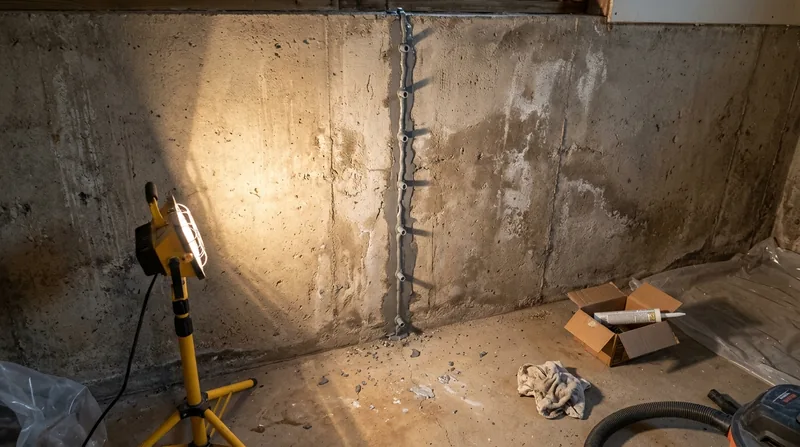
- We clean the crack face and drill injection ports at intervals along its length.
- We flush the crack with water or solvent so the resin bonds to clean concrete, not dust.
- We inject epoxy for structural cracks or polyurethane for active leaks that need to flex with the wall.
- We cap the ports, let the resin cure, and snap the ports flush with the wall.
- We recheck the wall and the cove joint for seepage before we call the job done.
When the inspection shows water entering along the whole wall base, we point you to an interior drain tile system rather than selling repeated injections.
Key info: On a split-level in Southern View, a homeowner had patched the same crack three times with hydraulic cement. The water kept returning because the crack was the exit, not the source. Injection plus a downspout extension and regrading stopped it in one visit.
Crack Repair Methods We Use and When Each One Fits
Not every crack gets the same treatment. The table below shows the approaches we use on Springfield basements and the conditions each one is built for. We pick from this list after the inspection, not before.
| Approach | Description | Best for |
|---|---|---|
| Epoxy injection | Structural resin injected under pressure that bonds the crack faces back together. | Dry, stable vertical or diagonal cracks in poured walls. |
| Polyurethane injection | Flexible foam resin that expands and seals active leaks. | Wet, seeping cracks and cold joints that move with the wall. |
| Crack and cove sealing | Surface seal at the wall-floor joint where seepage enters. | Minor cove joint seepage before drainage is needed. |
| Carbon fiber straps | Straps anchored to the wall that resist inward bowing. | Bowing or horizontal cracking from soil pressure. |
| Wall anchors | Exterior anchors that pull a failing wall back toward plumb. | Walls already moving inward on clay-heavy lots. |
If the inspection points to structural movement, our bowing wall repair page covers the bracing side of the work.
Foundation Crack Repair Cost in Springfield: What to Expect
Most single-crack injection jobs in Springfield start from $450, and that figure covers a typical vertical or diagonal crack in a poured wall with the ports, resin, and cleanup included. The price climbs with crack length, multiple cracks, and access problems like a finished basement wall that has to be opened. Active leaks that need polyurethane, or cracks that turn out to be structural, land higher because the work is different. We quote after the inspection, not over the phone.
Two or three written estimates is the smart play on anything above a single crack, because the diagnosis matters more than the number. A contractor who quotes injection without checking the cove joint and the grading outside is guessing. Our full pricing overview breaks down the ranges for each method.
Choosing a Foundation Crack Repair Contractor Near Me in Springfield
Ask for the license and the insurance certificate before anyone drills a port in your wall. Confirm the contractor carries general liability and workers' compensation, and that the certificate lists your address as the job site. Ask what method they plan for your crack and why, and be wary of anyone who quotes a price without seeing the wall from the inside. Structural foundation repair and drainage changes commonly require permits in this area, so ask who pulls them. Get two or three estimates and check references from jobs in Springfield or the nearby towns.
We walk every basement before we quote, and you can request a free estimate with no obligation to book. If your crack is in a specific neighborhood, the Chatham 62629 page covers the local conditions there.
Foundation Crack Repair in Springfield: Pricing Guide
| Service | Price | Details |
|---|---|---|
| Single crack injection | Starting at $450 | Includes ports, epoxy or polyurethane resin, and cleanup for one typical poured-wall crack. |
| Multiple crack injection | Starting at $750 | Covers two to three cracks in one visit, priced by total crack length and access. |
| Crack and cove joint sealing | Starting at $650 | Seals the wall-floor joint where seepage enters, often paired with crack injection. |
| Structural repair (carbon fiber or anchors) | On estimate | Bowing or horizontal cracking needs an on-site look before a number is given. |
| Travel | Included | In Springfield and surrounding areas, no separate call-out or mileage fee. |
| Estimate | Free | Response within 24h at (217) 960-8508, no obligation to book. |
Indicative pricing, the exact cost depends on square footage, finish, and site access. Free personalized estimate within 24h at (217) 960-8508.


