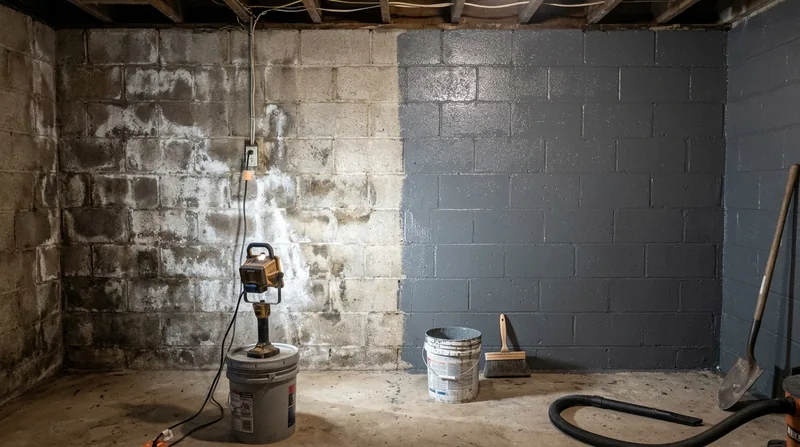




Springfield sits on glacial till and windblown loess silt over clay, and that shallow soil profile is exactly why so many basements here stay damp. The clay drains slowly, so spring rain and snowmelt stack groundwater up against low walls in the 1900s-1940s brick bungalows and foursquares of Enos Park and Ridgely, and in the 1920s-1960s ranches of Southern View. Basement Wall Sealing in Springfield starts with an honest diagnosis: a sealer fixes minor dampness and efflorescence, but it will not hold back hydrostatic pressure, and we tell you which problem you actually have before anyone touches a wall. Our crews prep the surface, strip the efflorescence, and apply penetrating or membrane sealers to stone, brick, block and poured walls. If the wall is weeping after every storm, we point you to basement waterproofing instead of selling you a coating that will peel by June.
Why Basement Wall Sealing Matters in Springfield's Clay and Loess Soil
Most of the housing stock here predates modern drainage. Stone and brick foundation walls in the older near-downtown blocks were laid with lime mortar and no exterior membrane, and the footing drains installed with them have had 80 to 100 years to silt shut. When the water table rises after a wet spring, that water finds the mortar joints first.
- Efflorescence shows up as white salt bloom on brick and block, and it means moisture is moving through the wall, not just sitting on it.
- Damp patches that darken after rain point to surface seepage that a penetrating sealer can actually address.
- Water pooling at the wall base or a musty basement smell usually signals hydrostatic pressure, which sealing alone will not stop.
- Spalling brick faces and crumbling parging on old stone walls mean freeze-thaw cycles have already worked the surface loose.
We check all four before quoting, because the wrong fix on a Springfield clay lot just moves the water somewhere else in the basement.
Key info: A 1925 foursquare off North Grand with white bloom on the block and dry walls between storms is a sealing job. The same wall with a wet floor line after every spring rain needs an interior perimeter drain, and we will say so on the inspection.
Homeowners can verify contractor registration and permit requirements through the Illinois state contractor resources and the City of Springfield building department before any work starts.
How We Seal a Basement Wall in Springfield, Step by Step
Sealing is surface work with a diagnostic step in front of it. We walk the basement, read the wall for moisture patterns, check grading and downspout extension outside, and confirm whether the drain tile and sump are moving water the way they should. Only then do we pick a product, because a membrane over an actively wet wall traps moisture and makes the problem worse.
- We map the wall and mark damp zones, cracks and efflorescence so the prep matches the actual failure points.
- We wire-brush and scrape loose parging, old paint and salt bloom down to sound masonry.
- We fill hairline cracks and mortar joints with a hydraulic or epoxy patch before any coating goes on.
- We apply the penetrating sealer or the membrane in the specified number of coats, keeping the wall within the product's moisture tolerance.
- We correct grading and extend downspouts so roof water lands at least 6 feet from the foundation.
- We leave a written note on what the sealer will and will not handle, and flag anything that needs a drain system.
The prep work is where most failed sealing jobs go wrong, so we do not skip it to hit a low bid.
Key info: On a 1958 brick ranch in Southern View, the rear wall bloomed every March. We stripped the salt, patched two mortar joints, applied a breathable membrane and extended the two rear downspouts to the alley. The wall has stayed dry through three springs since.
If the inspection shows a failed footing drain instead, we route the job to interior drain tile, which manages pressure rather than coating over it.
Sealing Approaches We Use on Springfield Basement Walls
| Approach | Description | Best for |
|---|---|---|
| Penetrating sealer | Sinks into block and poured concrete and blocks capillary moisture without a surface film. | Damp walls with no standing water or pressure. |
| Breathable membrane | Flexible coating that bridges hairline cracks and lets masonry vapor escape. | Brick and stone walls with mild seepage. |
| Crack injection plus seal | Epoxy or polyurethane injection into ports, then a sealer over the repaired wall. | Poured walls with one or two clear vertical cracks. |
| Efflorescence removal and parging repair | Salt removal, mortar repointing and new parging before sealing. | Old brick and stone walls with spalling faces. |
| Drainage correction | Grading, downspout extension and window well checks to cut the water source. | Walls that only get wet near the grade line. |
Basement Wall Sealing Cost in Springfield: What to Expect
Sealing is one of the lower-cost items in below-grade work, and pricing starts from $1,500 for a typical single-wall or partial-basement job with full prep and one coating system. A full basement with heavy efflorescence, patching and two coats runs higher. Wall length, wall material, how much prep the surface needs, and whether we find cracks that call for injection all move the number.
Old stone and brick walls take more labor than poured concrete because the mortar joints need repointing before any sealer goes on. Access matters too, since a finished basement with paneling and storage means more time protecting and moving things. Get two or three written estimates and compare scope, not just the total, because a cheap bid that skips prep will fail within a season.
Our full pricing overview breaks down the line items so you can see what each stage costs.
Basement Wall Sealing Near Me: How to Pick a Contractor Near Springfield
Ask for the license and insurance certificate before the first visit, and confirm the policy covers below-grade work. Get estimates in writing with the product named, the number of coats stated, and prep steps spelled out. Call two recent references in Springfield or Chatham and ask whether the wall stayed dry through the following spring.
Permits are commonly required for structural foundation repair and for work that alters drainage or the sanitary connection of a sump discharge, and thresholds vary by jurisdiction, so confirm with the City of Springfield building department. If your home sits in a historic district like Enos Park, check district review rules before exterior work. A contractor who hesitates on any of these questions is telling you something.
Reach out through our contact page and we will set up a free inspection with no obligation.
When Sealing Is Not the Answer
We would rather lose the sale than coat a wall that needs drainage. If water enters at the wall-floor joint after rain, if the floor is wet in a line along the perimeter, or if the sump runs constantly in spring, the water is under pressure and the fix is a drain system, not a sealer. For poured-wall cracks with active seepage, foundation crack repair with injection comes before any coating.
Homes on the creek-side lots near the Sangamon and around Lake Springfield see fast summer runoff, and those walls need a path for water, not a film over it. We will tell you plainly which category your basement falls into on the free inspection, and the answer is sometimes that a sealer plus grading is all you need.
Call (217) 960-8508 to schedule, and bring your questions about the wall, the drainage and the budget.
Basement Wall Sealing in Springfield: Pricing Guide
| Service | Price | Details |
|---|---|---|
| Single wall sealing | Starting at $1,500 | Surface prep, efflorescence removal and one coating system on a single basement wall. |
| Full basement sealing | Starting at $2,800 | All walls prepped and sealed; price rises with wall length and number of coats. |
| Crack injection plus sealing | Starting at $2,200 | Epoxy or polyurethane injection into ports, then sealer over the repaired poured wall. |
| Stone or brick repointing and sealing | On estimate | Old masonry needs joint repointing and parging repair before any sealer goes on. |
| Travel | Included | In Springfield and surrounding areas, no separate call-out or mileage fee. |
| Estimate | Free | Response within 24h at (217) 960-8508, no obligation to book. |
Indicative pricing, the exact cost depends on square footage, finish, and site access. Free personalized estimate within 24h at (217) 960-8508.


