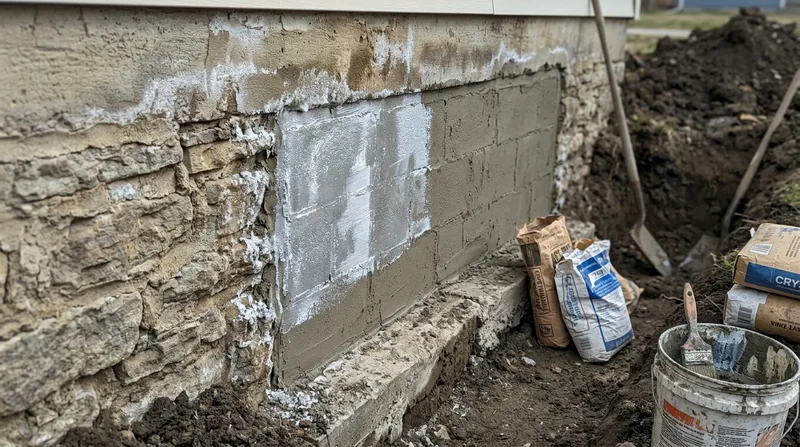




Springfield sits on glacial till and windblown loess silt over slow-draining clay, and the Sangamon River, its creeks and Lake Springfield keep the water table close to the surface in spring. That combination is hard on below-grade walls, and it is why Foundation Waterproofing in Springfield has to be matched to the actual wall material, not sold as a one-size package. The 1900s to 1940s brick and frame bungalows, foursquares and Colonial Revivals in Enos Park, Ridgely and the older near-downtown blocks often have full basements of stone, brick or early block that were never damp-proofed. The 1920s to 1960s brick ranches and split-levels in Southern View and across the south and east sides have partly finished basements with their own seepage patterns. West and north side subdivisions built from the 1970s to the 2000s are mostly poured full basements and some walkouts, and those walls crack and weep differently again. We read the foundation before we quote it, and we tell you when simple crack sealing is enough. Start with a free basement inspection and we will map where the water is actually entering.
Why Foundation Waterproofing Matters on Springfield's Clay and Loess Soils
Clay soils drain slowly, so spring rain and snowmelt build up groundwater and press it against low basement walls as hydrostatic pressure. Summer storms then send fast runoff down to creek-side lots, and the freeze-thaw cycle works on every mortar joint and hairline crack through the cold months. In a 1920s brick bungalow near Ridgely, that shows up as white efflorescence blooming on the wall and a damp band along the cove. In a 1990s poured basement on the west side, it usually shows up as a vertical crack that seeps after every heavy rain. The dominant failure mode here is hydrostatic pressure against old masonry and early block walls, not a single isolated crack.
- Efflorescence and a white salt bloom on brick or block tells you moisture is moving through the wall, not just condensing on it.
- A musty basement smell that gets stronger in spring points to ongoing seepage rather than a one-time leak.
- Water after rain along the wall-to-floor joint usually means the footing drain or interior perimeter drain is failing.
- Horizontal cracking or a wall that is visibly bowing needs a structural look before any coating goes on.
- Rust streaks under a window well or a wet patch at the sill often trace back to surface water that was never graded away.
Sorting those symptoms early is what separates a small repair from a full perimeter drainage correction. Permits for structural foundation work and drainage changes vary by jurisdiction, so verify the current rules with the City of Springfield Building and Zoning office before work starts. You can review the city's permit guidance at springfield.il.us.
Key info: A 1918 foursquare in Enos Park with a stone foundation and a damp cove is a different job from a 1985 poured wall in Chatham with one seeping crack. We scope each one on its own evidence.
How We Waterproof a Springfield Foundation, Step by Step
We start by finding the source, not by selling a coating. That means checking grading and downspout extension first, then the wall itself for cracks, spalling and bowing, then the drain tile and sump basin if the home has them. Only after that do we pick the method: parging and crack repair, a waterproof membrane or crystalline treatment, or drainage correction underneath. The goal is to relieve hydrostatic pressure and stop water at the wall, matched to whether you have stone, brick, early block or poured concrete.
- We walk the exterior grade and discharge lines to confirm surface water is being carried away from the foundation.
- We inspect the interior wall face for crack patterns, efflorescence and any sign of a bowing wall.
- We test the existing drain tile and sump pump, including the check valve, to see whether the below-grade drainage still works.
- We repair cracks by epoxy injection or polyurethane injection depending on whether the crack is structural or still active.
- We apply the right wall treatment (parging, membrane or crystalline) for the foundation material.
- We correct drainage where needed with an interior perimeter drain, exterior membrane and dimple board, or a french drain.
- We verify the sump discharge line and grading before we call the job done.
Each step gets documented with photos so you can see what was found and what was corrected. For homes where the wall is wet across the whole perimeter, an interior drain tile system is often the better answer than exterior excavation.
Key info: On a 1950s brick ranch in Southern View, we found the downspouts dumping within two feet of the wall and a failed footing drain. Extending the downspouts and rebuilding the interior perimeter drain solved it without digging the exterior.
Approaches We Use and When Each One Fits
Not every wet wall needs the same treatment, and the right approach depends on wall material, crack activity and how much pressure the soil is putting on the foundation. This table is the short version of how we match method to condition.
| Approach | Description | Best for |
|---|---|---|
| Crack injection | Epoxy injection for structural cracks, polyurethane injection for active seeping cracks, using injection ports. | Poured walls with vertical or hairline cracks that seep after rain. |
| Parging and wall sealing | Repair of spalled mortar and a breathable or crystalline treatment matched to the masonry. | Brick, block and early poured walls with surface seepage. |
| Interior perimeter drain | Interior drain tile at the footing that routes water to a sump basin and pump. | Wet walls across the full perimeter where exterior digging is impractical. |
| Exterior membrane and dimple board | Waterproof membrane against the wall with dimple board and corrected footing drain. | Homes where the exterior is accessible and the wall needs full protection. |
| Structural correction | Carbon fiber straps or wall anchors for a bowing wall before waterproofing. | Block walls with horizontal cracking or visible inward movement. |
We tell you plainly when a $600 crack seal is enough and when the real problem is hydrostatic pressure that needs drainage work underneath.
Foundation Waterproofing Cost in Springfield: What to Expect
Foundation waterproofing in Springfield starts at $3,500 for a targeted crack repair and wall treatment on a single wall. Full perimeter work with interior drain tile and a sump pump moves well above that, and the spread is driven by the foundation itself. Stone and early block walls take more prep and more material than a clean poured wall. Access matters too: a Ridgely bungalow with a narrow side yard and established plantings costs more to work around than an open lot in Sherman. So does urgency, because an active leak found after a storm often means a faster schedule.
We price by the linear footage of wall treated, the number of injection ports and the drainage scope, not by a flat package. That is why we recommend getting two or three estimates and comparing what is actually included, not just the bottom line. A quote that skips the drain tile test is not the same job as one that includes it. You can see how our numbers break down on the pricing page.
Hiring a Foundation Waterproofing Contractor Near Me in Springfield
When you search for foundation waterproofing near me in Springfield, the first thing to check is whether the contractor is licensed and insured for below-grade structural work. Ask for the certificate, not just a verbal yes. Get at least two or three written estimates and make sure each one states the wall material, the method and whether drainage is included. Ask for local references, ideally on a home built in the same era as yours, because a stone foundation in Enos Park and a poured wall in Chatham are not the same job. Confirm who pulls the permit, since structural foundation repair and drainage changes commonly require one and thresholds vary by jurisdiction, so verify with the City of Springfield Building and Zoning office. If your block has HOA rules on exterior work or discharge lines, check those before scheduling. Reach us through the contact page to set up a walkthrough.
Signs You Need Foundation Waterproofing Near Me in Springfield
Most homeowners call after the second or third wet spring, not the first. The pattern to watch is water returning to the same spot after every heavy rain, or a damp band that never fully dries between storms. On the older brick and stone walls near downtown, efflorescence and spalling mortar are the early warning. On west side poured basements, a vertical crack that seeps is usually the first sign. If a sump pump runs constantly or short-cycles, the drainage below the floor is telling you something too, and a sump pump replacement may be part of the answer. Catching these signs before the wall movement starts is what keeps the repair small.
Seasonal Timing for Foundation Waterproofing in Springfield
Demand here follows the freeze-thaw cycle and the spring water table. Late winter and early spring are when snowmelt and rain push groundwater against low basement walls, so that is when most wet basement calls come in. Summer storms bring fast runoff to creek-side lots and expose failing footing drains. Late fall is the quiet window, and it is a good time to correct grading and downspout extension before the ground freezes. Interior work can be scheduled year-round, but exterior excavation is best in the drier months when the soil will hold a trench. If you are seeing water now, do not wait for the ideal season.
Foundation Waterproofing in Springfield: Pricing Guide
| Service | Price | Details |
|---|---|---|
| Crack repair and wall treatment | Starting at $3,500 | Includes injection or parging on a single wall, with prep and material matched to the foundation type. |
| Interior perimeter drain and sump | Starting at $7,500 | Covers interior drain tile, sump basin and pump, with linear footage and pump choice moving the price. |
| Exterior membrane and drainage | On estimate | Requires excavation access, wall condition review and footing drain scope before a number is given. |
| Structural correction before waterproofing | On estimate | Carbon fiber straps or wall anchors depend on the extent of bowing and need an on-site structural look. |
| Travel | Included | In Springfield and surrounding areas, no separate call-out or mileage fee. |
| Estimate | Free | Response within 24h at (217) 960-8508, no obligation to book. |
Indicative pricing, the exact cost depends on square footage, finish, and site access. Free personalized estimate within 24h at (217) 960-8508.


