Why Springfield Homes Face Unique Waterproofing Challenges
If you live in Springfield, you already know that our weather swings from humid summers to freezing winters, and that cycle puts real stress on a foundation. But the bigger issue is often underground: much of central Illinois sits on dense clay soil that drains very slowly. When rain or snowmelt saturates that clay, water has nowhere to go but against your basement walls and under your slab. That is why so many homeowners here deal with damp walls, musty odors, and occasional seepage even when their foundation looks fine from the outside.
This is also why a generic national waterproofing pitch often misses the mark locally. A system designed for sandy soil in another state may not handle the hydrostatic pressure that builds up in Illinois clay. Understanding the difference between interior and exterior approaches, and how each performs in our specific soil conditions, is the first step toward choosing a solution that actually keeps your basement dry. The right answer depends on your home's age, the type of foundation, and where the water is entering.
Interior vs Exterior Waterproofing: How Each Approach Works
When people search for interior vs exterior waterproofing, they are usually trying to understand two very different strategies. An Interior Drain Tile System is installed inside the basement, typically along the perimeter of the floor. It captures water that has already entered the block or poured wall and routes it to a sump pump, which discharges it away from the house. This approach does not stop water from reaching the foundation, but it manages it before it can flood your living space. It is often faster to install and less disruptive to landscaping.
Exterior Basement Waterproofing works from the outside. The crew excavates around the foundation, applies a waterproof membrane to the exterior walls, and installs exterior drain tile and gravel to redirect groundwater away from the home. This method addresses the source of the problem by keeping water out in the first place. It is generally more thorough but also more labor-intensive, and it requires digging up the soil and any landscaping, decks, or walkways that sit against the foundation.
Drain Tile vs Exterior Membrane: Which Works Better in Illinois Clay?
The drain tile vs exterior membrane debate is central to any waterproofing comparison in central Illinois. Because our clay soil holds water instead of letting it drain quickly, hydrostatic pressure against basement walls can be significant. An exterior membrane combined with exterior drain tile is often the gold standard for new construction or for homes where the foundation is exposed and the budget allows for excavation. It creates a barrier and a drainage path before water ever touches the wall. For homeowners in Chatham and similar communities with expansive clay, this can be a long-term fix.
However, exterior work is not always practical. Mature landscaping, attached garages, and finished basements can make excavation expensive or risky. In those cases, an interior drain tile system is often the smarter choice. It handles the water that inevitably finds its way in and keeps the basement usable. Many Basement Waterproofing projects in older Springfield neighborhoods combine interior drainage with crack injection and vapor barriers to address multiple entry points at once.
Basement Waterproofing Near Me: When to Call a Professional
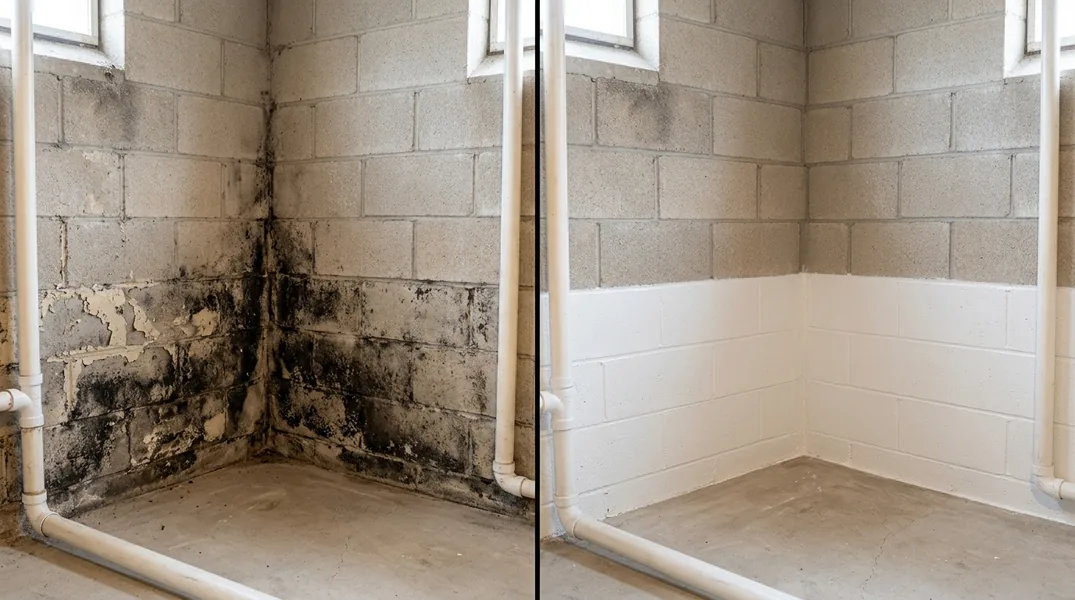
If you are searching for basement waterproofing near me in the Springfield area, you are probably noticing one or more warning signs: white powdery efflorescence on the walls, a damp smell that never goes away, water stains near the cove joint, or actual standing water after heavy rain. These are not problems that improve on their own. In fact, small seepage often gets worse as clay soil stays saturated and freeze-thaw cycles open tiny cracks. Waiting can lead to mold growth, damaged drywall, and foundation movement that costs far more to repair than the original leak.
A professional assessment matters because the correct fix depends on where the water is coming from. A company that only sells one type of system may push that system regardless of your situation. At Springfield Waterproofing, we evaluate the foundation type, grading, gutter discharge, and soil conditions before recommending interior or exterior work. If you are in Sherman or Williamsville, the same clay-related issues apply, and a local inspection is the fastest way to get clarity. Call (217) 960-8508 to schedule a free estimate and get a straight answer about what your basement actually needs.
Basement Waterproofing Cost in Springfield: What to Budget
Homeowners often ask about pricing before they understand the scope of work, and that is completely reasonable. Interior drain tile systems are typically less expensive than full exterior excavation because they involve less digging and disruption. Exterior membrane and drain tile projects cost more due to excavation, material, and restoration of landscaping. The exact figure depends on linear footage, foundation type, sump pump requirements, and whether additional work like crack repair or window well drainage is needed.
It is also worth thinking about cost over time. A properly installed interior system with a reliable sump pump can protect a finished basement for decades, while repeated patch jobs and mold remediation add up quickly. For Foundation Waterproofing that addresses structural concerns as well as water, the investment is even more important. We provide transparent written estimates so you can compare options side by side and understand what is included. Reach out at (217) 960-8508 or request a free estimate to get numbers specific to your home.
Making the Right Choice for Your Springfield Home
There is no single answer that fits every house. A newer home with exposed foundation walls and room to excavate may benefit most from exterior waterproofing, while an older home with a finished basement and established landscaping often does better with an interior drain tile system. Some properties need a combination. The key is to base the decision on the actual water path, not on a sales script. Our team looks at grading, downspouts, soil, and foundation condition before recommending anything.
If you have been putting off a solution because you are unsure which method is right, start with an inspection. Springfield Waterproofing serves homeowners across the Springfield area and can explain the tradeoffs in plain language. Whether you need a Interior Drain Tile System, exterior work, or targeted foundation repairs, the goal is the same: a dry, usable basement and a foundation that holds up through Illinois weather. Call (217) 960-8508 today to get started.
Looking for a professional basement waterproofing contractor in Springfield? Springfield Waterproofing responds fast for all your basement waterproofing needs.
Get a Free QuoteOur services: Basement Waterproofing · Interior Drain Tile System · Exterior Basement Waterproofing